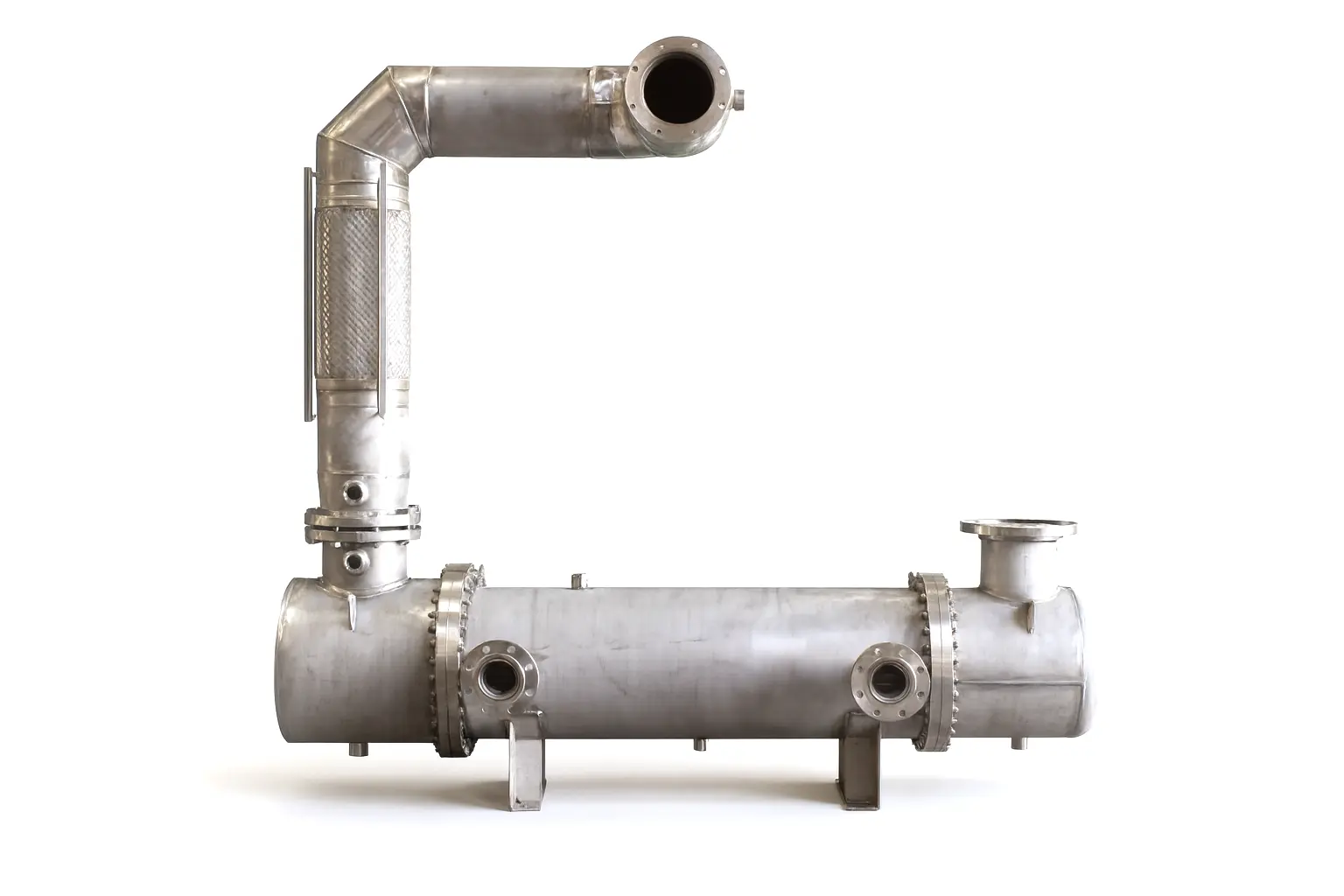
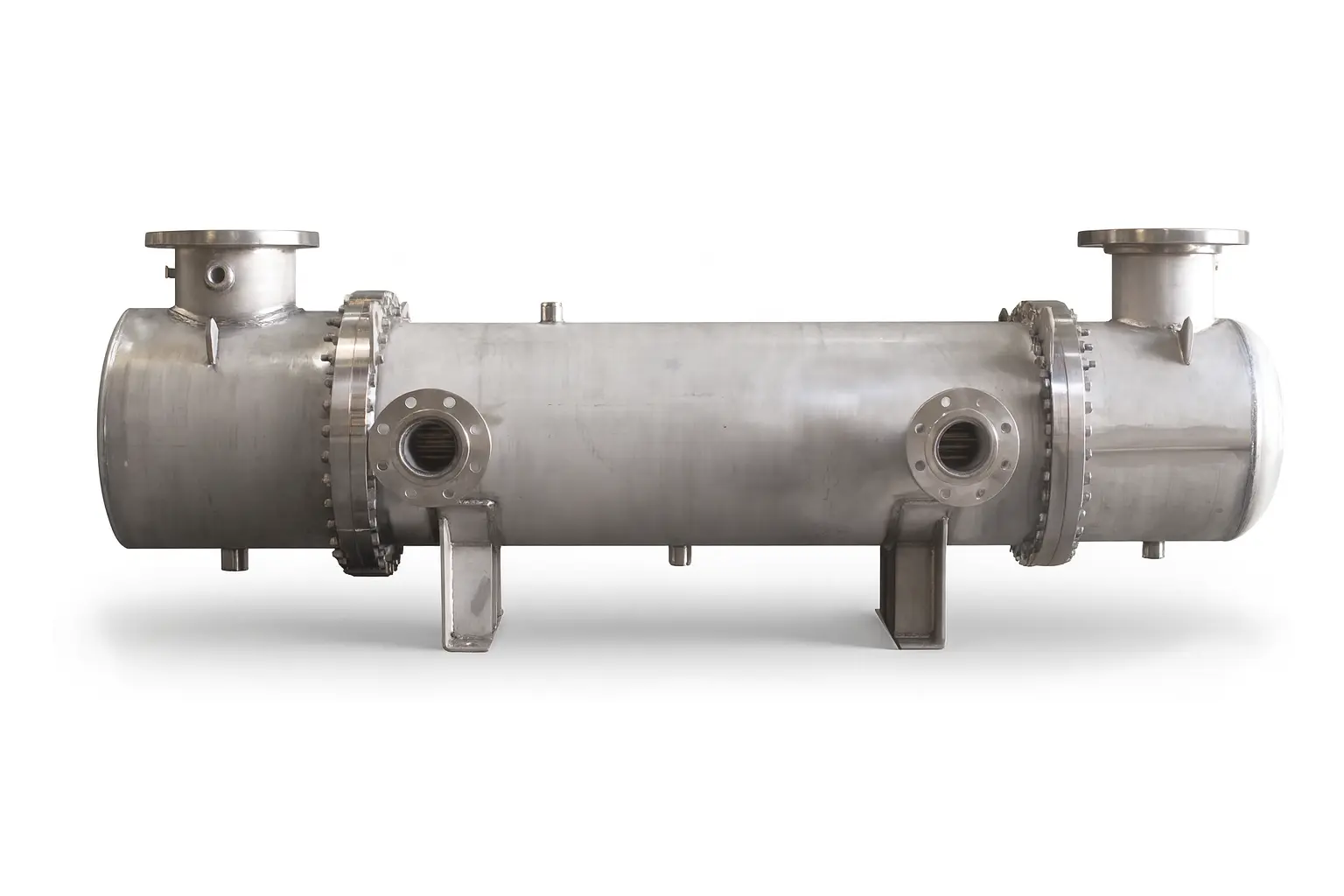
This shell and tube water–exhaust gas heat exchanger is designed to recover heat from internal combustion engine flue gases, turning energy that would otherwise be wasted into useful heat for other processes or water circuits.
It is an ideal solution for those who want to increase overall plant efficiency and reduce energy consumption and emissions, especially in combined heat and power (CHP) systems and continuous industrial applications.
Water–exhaust gas heat exchanger for cogeneration
In cogeneration plants, the simultaneous production of electrical/mechanical power and heat requires components capable of handling high temperatures and demanding operating conditions. The Sesino shell and tube water–exhaust gas heat exchanger is specifically designed to cool the exhaust gases from internal combustion engines, transferring thermal energy to the water circuit.
This configuration makes it possible to recover a significant share of heat from the exhaust gas and reuse it, for example, for space heating, industrial processes or preheating of other fluids. The result is a higher overall system efficiency and lower energy costs compared to plants without heat recovery.
Shell and tube construction for high temperatures
The shell and tube design is engineered to withstand high temperatures, significant temperature differences and continuous operation, as typically found in cogeneration engines. Tube bundle sizing, material selection and internal geometry are carefully designed to provide an efficient heat transfer surface while ensuring high mechanical strength.
Depending on the application, the heat exchanger can be configured and sized on a custom basis, adjusting length, diameter, tube type and connections for optimal plant integration. This design flexibility allows you to achieve the best balance between thermal performance, pressure drops and available space.
Applications with ATEX requirements
Sesino shell and tube water–exhaust gas heat exchangers can also be used on internal combustion engines installed in areas with stringent safety requirements, such as explosion‑proof applications that require ATEX certification. In these environments, the design and choice of materials take into account the relevant standards, ensuring safe operation and regulatory compliance.
This makes the heat exchanger particularly suitable for industrial and cogeneration plants installed in hazardous areas, where the safe handling of hot exhaust gases is a critical requirement. Using ATEX‑compliant components helps reduce operational risks and ensure service continuity.
Operational and efficiency benefits
Integrating a shell and tube water–exhaust gas heat exchanger into systems with internal combustion engines increases the plant’s energy efficiency without radically modifying its layout. Recovering heat from exhaust gases reduces the required thermal power from additional sources, delivering direct economic benefits and a lower environmental impact.
Robust construction, combined with the possibility of custom design, reduces the need for extraordinary maintenance and supports a long service life for the heat exchanger. For operators running cogeneration and continuous‑duty plants, this type of solution is a key enabler to improve efficiency, valorize waste heat and operate in a more sustainable way.