
SHELL AND TUBE WATER OIL HEAT EXCHANGERS
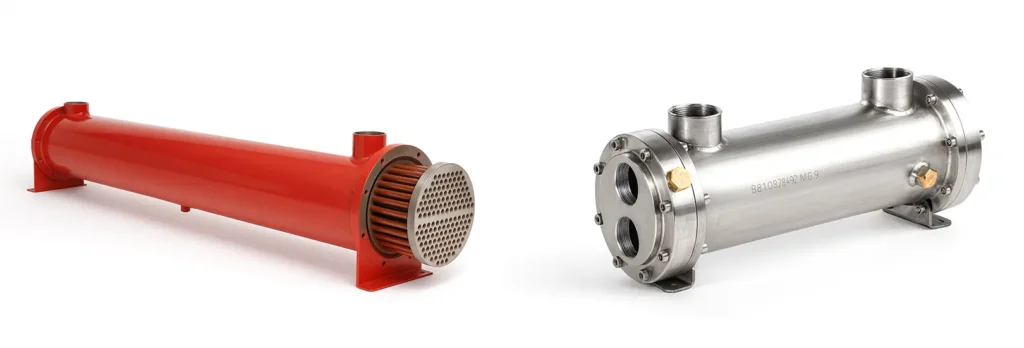
Sesino shell‑and‑tube water‑oil heat exchangers are designed for reliable cooling of hydraulic oil and lubricants using industrial or mains water.
These water‑oil heat exchangers are the ideal solution for industrial plants and heavy‑duty applications that require high thermal capacity, continuous operation and long service life.
What shell‑and‑tube water‑oil heat exchangers are, how they work and where they are used
In shell‑and‑tube water‑oil heat exchangers, hot oil is cooled by water flowing in a separate circuit through a bundle of small‑diameter smooth tubes. Hot oil generally flows in the shell, externally over the tube bundle. Cooling water flows inside the tubes in one or more passes (1, 2 or 4 passes depending on configuration), providing high heat transfer area and heat transfer coefficient. The shell‑and‑tube configuration offers a good balance between thermal performance, pressure drop and mechanical strength, making these water‑oil exchangers suitable for continuous duty and demanding thermo‑mechanical conditions.
Sesino water‑oil heat exchangers are used in:
- Industrial hydraulic systems
- Plastic and rubber presses
- Machine tools and process machinery
- Gearboxes and drive units
- Compressors and high‑power hydraulic units
- Marine and Oil & Gas applications, including seawater or corrosive fluids in dedicated versions
Benefits of shell‑and‑tube water‑oil heat exchangers
Choosing Sesino shell‑and‑tube water‑oil heat exchangers from the ACQUA‑OLIO range offers several competitive advantages.
- High cooling efficiency Water has significantly higher heat capacity and heat transfer coefficient than air, allowing high cooling power in limited space and handling of high thermal loads with compact dimensions.
- Stable oil temperature control Water‑oil heat exchangers keep oil temperature within the ideal range (typically 45–55 °C for hydraulic oils), improving efficiency, reliability and life of pumps, valves and components.
- Robustness and long service life Sesino tube bundles use materials such as steel, brass, copper, CuNi or stainless steel, designed to withstand significant static pressures and continuous operation in industrial and marine plants.
Inspectability and maintenance versions with removable tube bundle allow inspection on both water and oil side, simplifying internal cleaning and enabling use with less‑filtered liquids. This is a major advantage in the presence of hard water, dirty fluids or applications with residues.
Material and configuration flexibility
The possibility to choose specific materials (copper for fresh water, CuNi for seawater, stainless steel for corrosive fluids/gases) and different designs (non‑inspectable, water‑side inspectable, fully removable bundle) makes Sesino water‑oil tube bundles suitable for many contexts.
WATER-OIL range: Sesino tube bundles
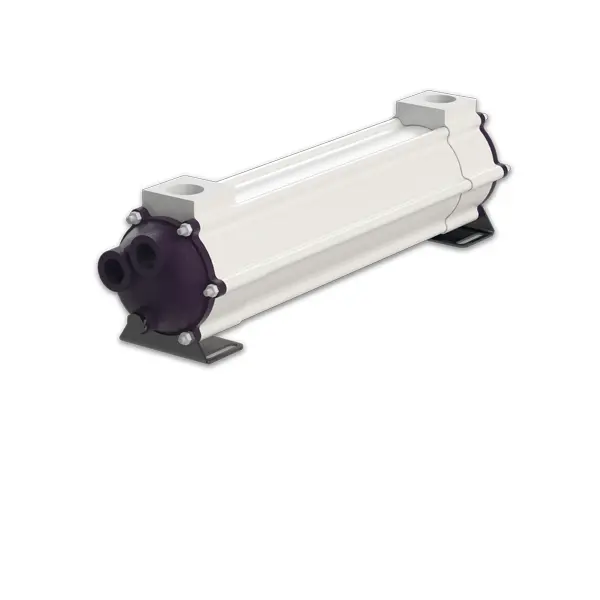
T Series: non‑inspectable shell‑and‑tube water‑oil exchangers, compact, for standard applications with industrial water
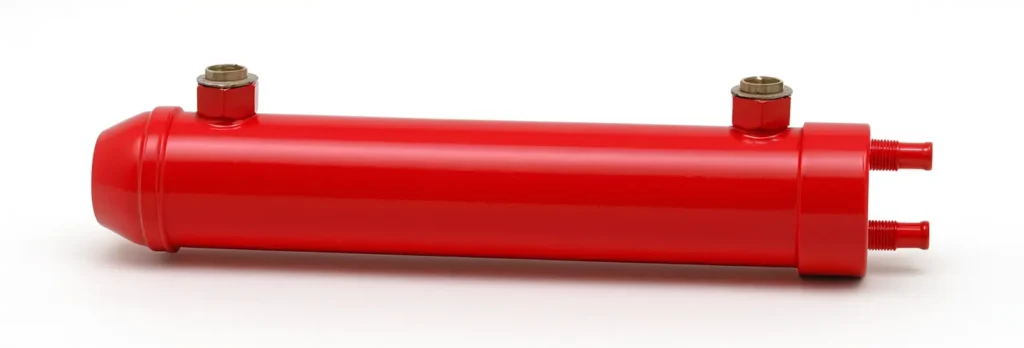
MS SERIES: Water‑side inspectable water‑oil exchangers, with removable covers, ideal when water circuit cleaning/inspection is required (e.g. hard or poorly filtered water)
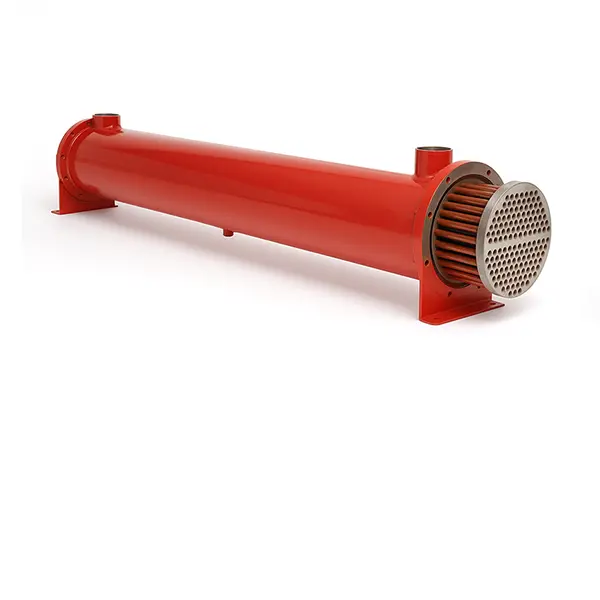
MSG SERIES: Shell‑and‑tube water‑oil exchangers with removable bundle, fully dismountable and inspectable on both oil and water side, suitable for unfiltered liquids, seawater, corrosive fluids or gases
Typical applications of water‑oil heat exchangers
- Industrial hydraulic systems: power units, presses, handling systems, lifting systems
- Plastic and rubber presses: cooling of hydraulic circuits and gearboxes in continuous‑duty applications with strong thermal cycles
- Machine tools and process machinery: lathes, machining centers, production lines where oil temperature stability is critical for precision and reliability
- Gearboxes and transmissions: lubrication oil cooling, especially on large gear units
- Compressors, turbines and power units: cooling of lubrication oil, control oil and auxiliary systems
- Marine and Oil & Gas applications: use with seawater or industrial water in marine, offshore and process plants, using materials such as CuNi or stainless steel to resist corrosion and harsh conditions
Technical data range of the ACQUA‑OLIO tube‑bundle series
- Bundle diameter and size Typical bundle diameters from about 60 mm up to 350 mm, with heat transfer surfaces reaching several square meters (for example up to about 7–10 m² on larger sizes, depending on series).
- Oil flow rates Hydraulic oil flow rates from a few tens of l/min up to more than 500–800 l/min, depending on model and operating conditions.
- Operating pressures and temperatures
- Oil side pressure: typical values around 12 bar max static pressure, with higher test pressures
- Water side pressure: up to about 5–10 bar static, depending on series
- Maximum oil temperature: up to around 120 °C
- Maximum water temperature: typically around 70 °C
- Heat transfer capacity The range covers powers from fractions of kW/°C up to several kW/°C (for example more than 8 kW/°C on larger models, depending on flow rates and design conditions).
How to select the right shell‑and‑tube water‑oil heat exchanger
- Thermal power to dissipate Estimate the thermal kW generated by the system (for example from installed power and efficiency) to choose an exchanger with suitable capacity.
- Flow rates and fluid conditions Know oil flow rate, viscosity and desired inlet/outlet temperatures, as well as available water flow rate and temperature. These data determine model, number of water passes and acceptable pressure drops.
- Water type and material compatibility
- Industrial/fresh water → standard tube and material combinations (e.g. copper, anodized aluminum shells)
- Seawater or marine environments → CuNi or special alloys for corrosion resistance
- Corrosive fluids or gases → stainless‑steel executions and special materials
- Operating conditions and fluid quality In the presence of hard water or dirty fluids, it is advisable to choose inspectable or removable‑bundle versions to simplify maintenance and internal cleaning.
- Installation layout Available space, connection type and position in the skid or plant influence dimensions, nozzle orientation and series choice.
- In case of doubt, involve Sesino technical support and provide:
- System diagram or design data
- Thermal power and flow rates
- Water and oil characteristics
- Ambient conditions and applicable regulations (e.g. marine or Oil & Gas use)